My role
Creative producer / producer
Creative and production coordination of the 3DGS workflow: shaping the case, connecting capture, ML processing, art direction, Unity scene assembly and production needs.
Private portfolio preview · Gaussian Splatting
Creative production, R&D strategy and consulting for applied 3DGS workflows.
Since 2024, Georgy Molodtsov has worked across production shots, virtual production tests, capture pipelines, interactive worlds, Physical AI simulation and public education around Gaussian Splatting.
3DGS showreel · capture, production tests and real-time workflows
Why 3DGS matters
Gaussian Splatting reconstructs spaces, people and objects as millions of volumetric points with color, opacity and shape. It preserves the photographic messiness of real locations, handmade objects, costumes, foliage and reflections.
That makes it useful where classic 3D modeling is too slow or too clean: virtual production, VFX, digital twins, immersive worlds and simulation environments that need to stay close to captured reality.
Selected work
This private page is a compact overview of Georgy's applied Gaussian Splatting work: from production pipelines and series shots to event marketing, generative VFX, spatial memory and Physical AI simulation.
3D & VFX
3DGS for Film & TV VFX: capture, model processing, scene assembly, effects and final render handoff for a real series pipeline.
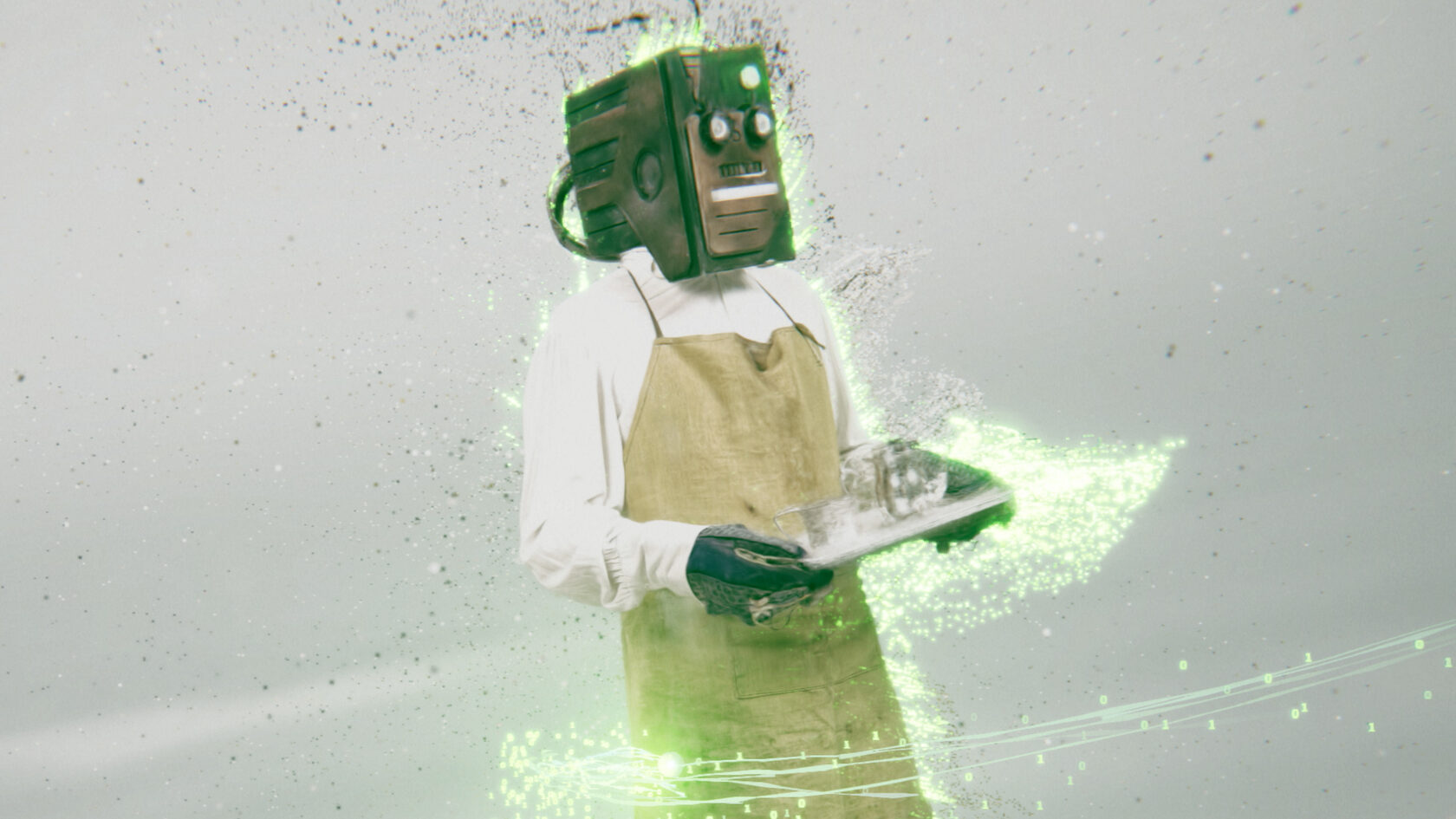
For the second season of Cybervillage, Georgy Molodtsov worked as creative producer and producer on a Gaussian Splatting-based workflow for a complex robot shot.
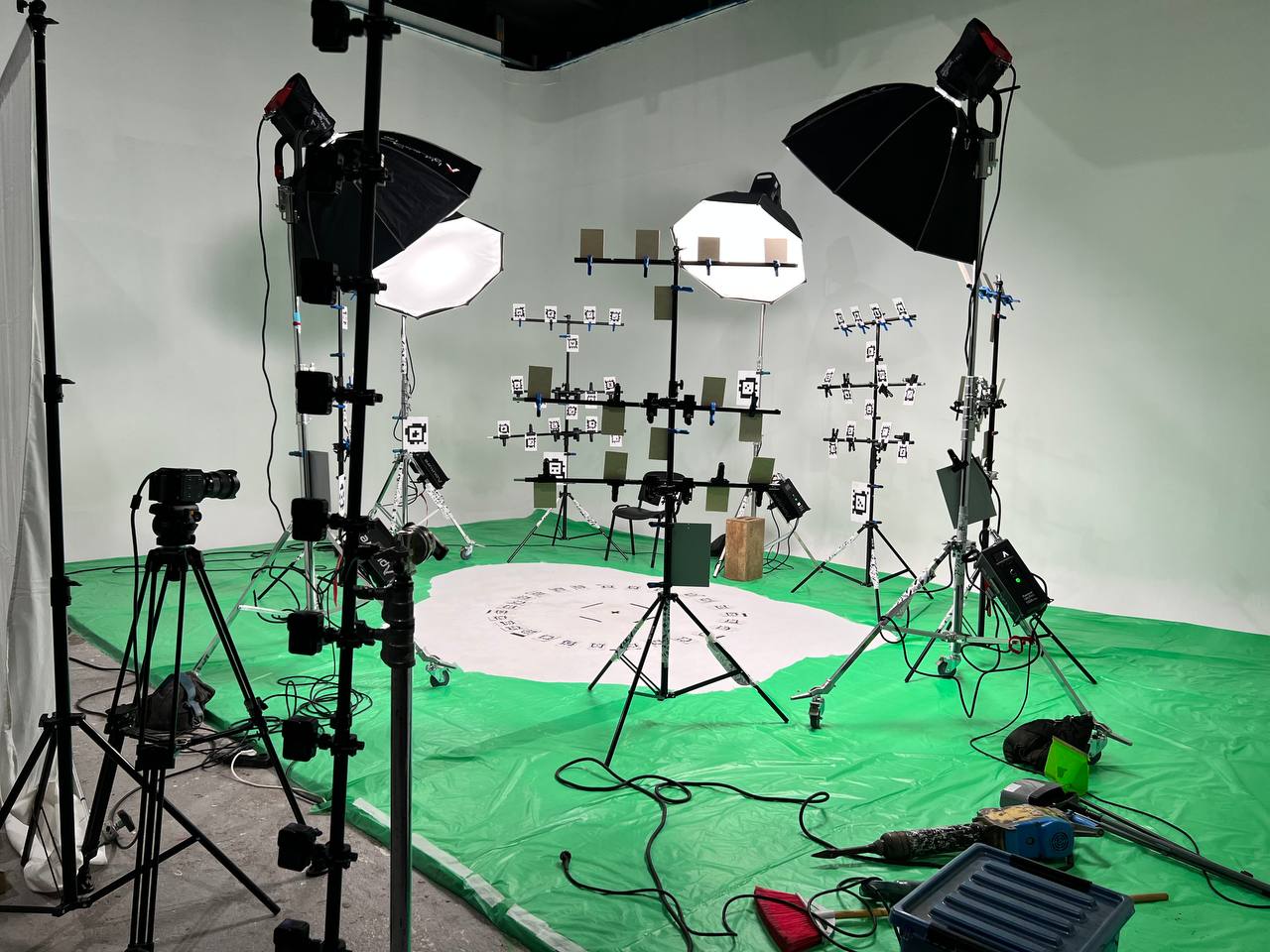
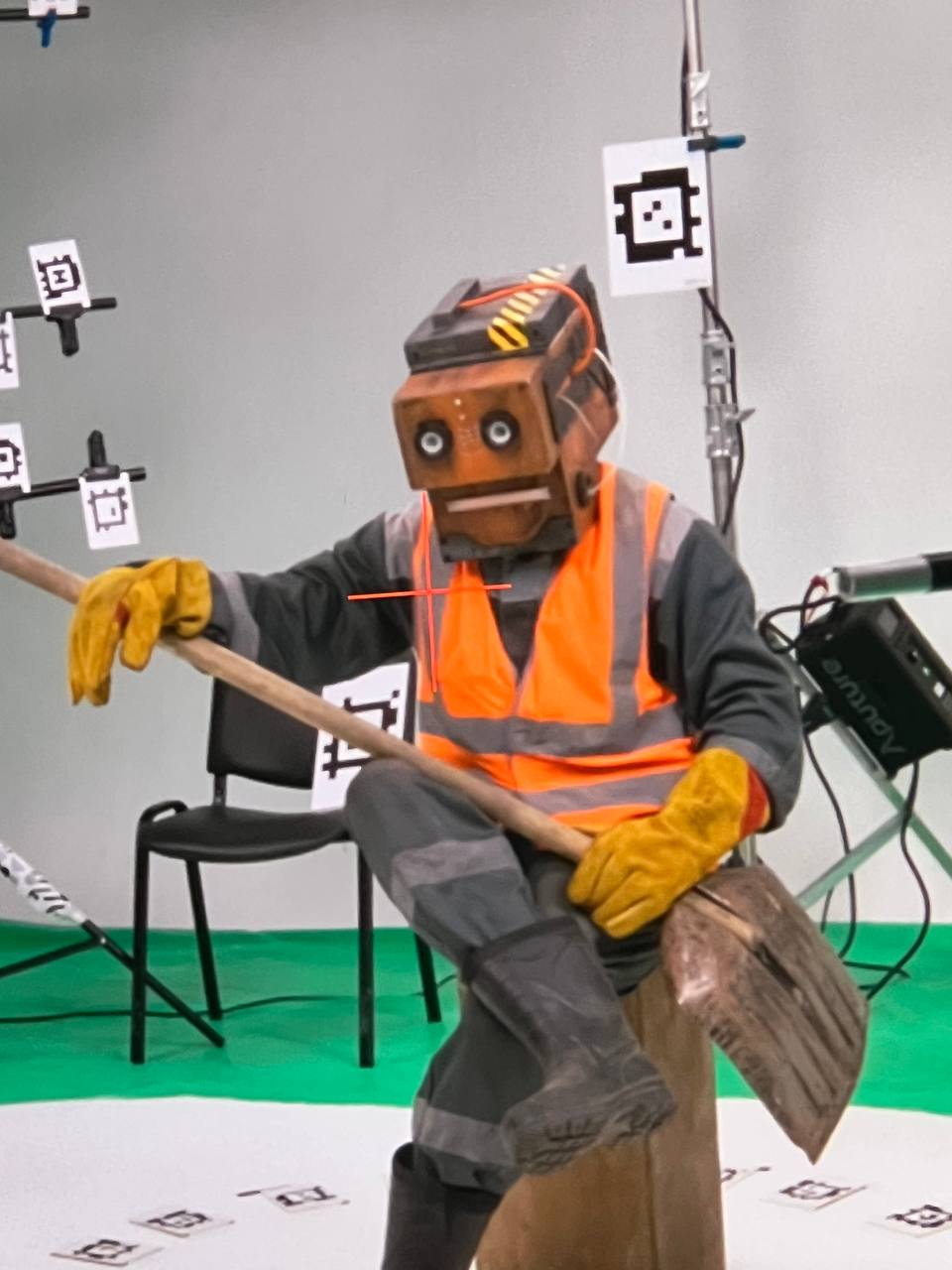
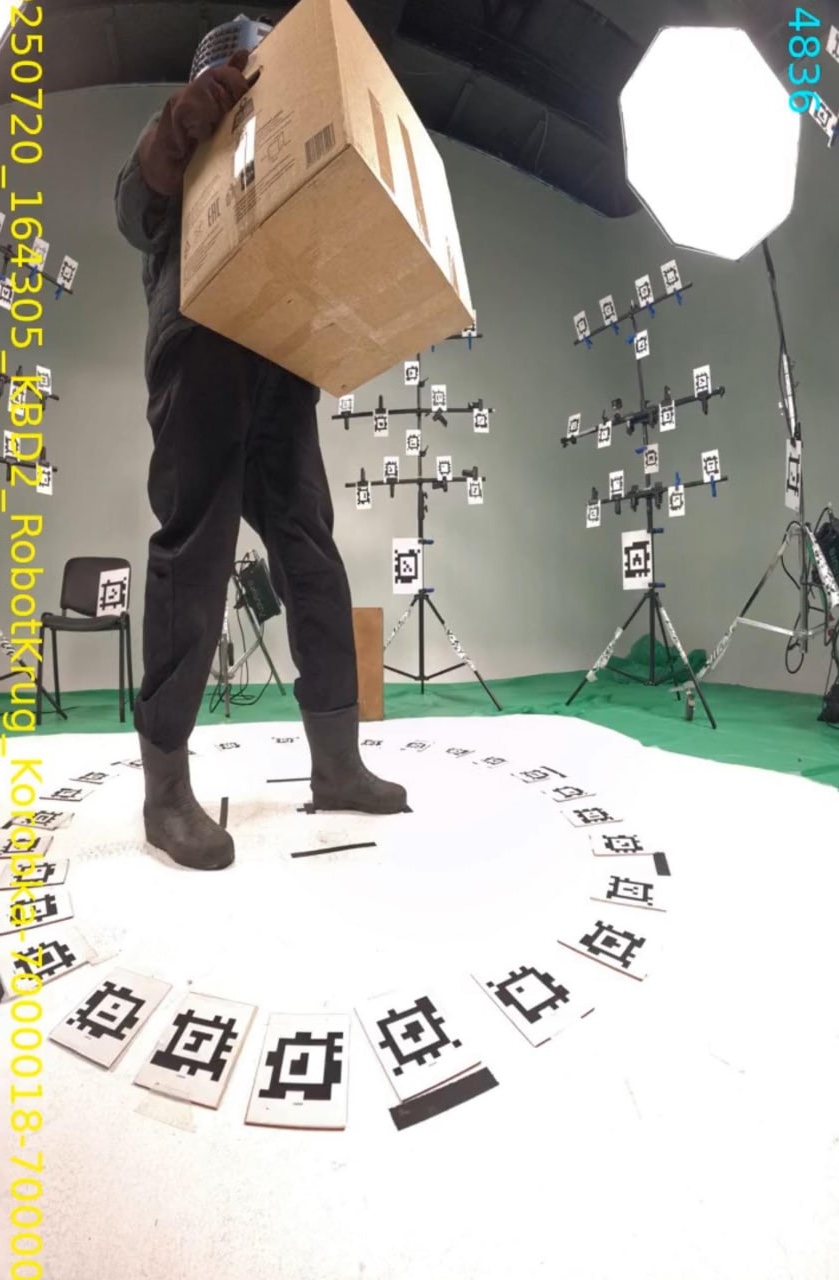
The team captured humanoid robot characters with a multi-camera setup, processed approximately 120 shots including takes through a proprietary 3DGS training pipeline optimized for humanoid detail, edited the resulting models, assembled the scene and camera movement, added effects using a proprietary Unity import workflow with VFX Graph, rendered the material, and handed it to the production company for final mastering.
The case demonstrated how 3DGS can reduce the need for full manual 3D modeling while preserving the visual richness of physical costumes, reflective surfaces and handmade production design.
Final shot preview without sound. Mastering completed by the production company.
My role
Creative and production coordination of the 3DGS workflow: shaping the case, connecting capture, ML processing, art direction, Unity scene assembly and production needs.
Pipeline
Multi-camera shooting, proprietary 3DGS training, model editing, Unity import, VFX Graph scene setup, camera animation, effects, render and mastering handoff.
Context
Client context: Yandex Plus Studio and Birchpunk. Public version can be generalized as a sci-fi streaming series production case.
Credits
Georgy Molodtsov - Creative Producer / Producer · Dmitry Vorobyev - Art Director, 3DGS VFX Supervisor · Ilya Serov - Director of Photography · Sergey Eliseev - ML Lead · Yaroslav Romanenko - 3DGS Creation · Igor Khuraskin - Infrastructure Lead · Anatoly Starostin - Project Lead
Virtual production pipelines
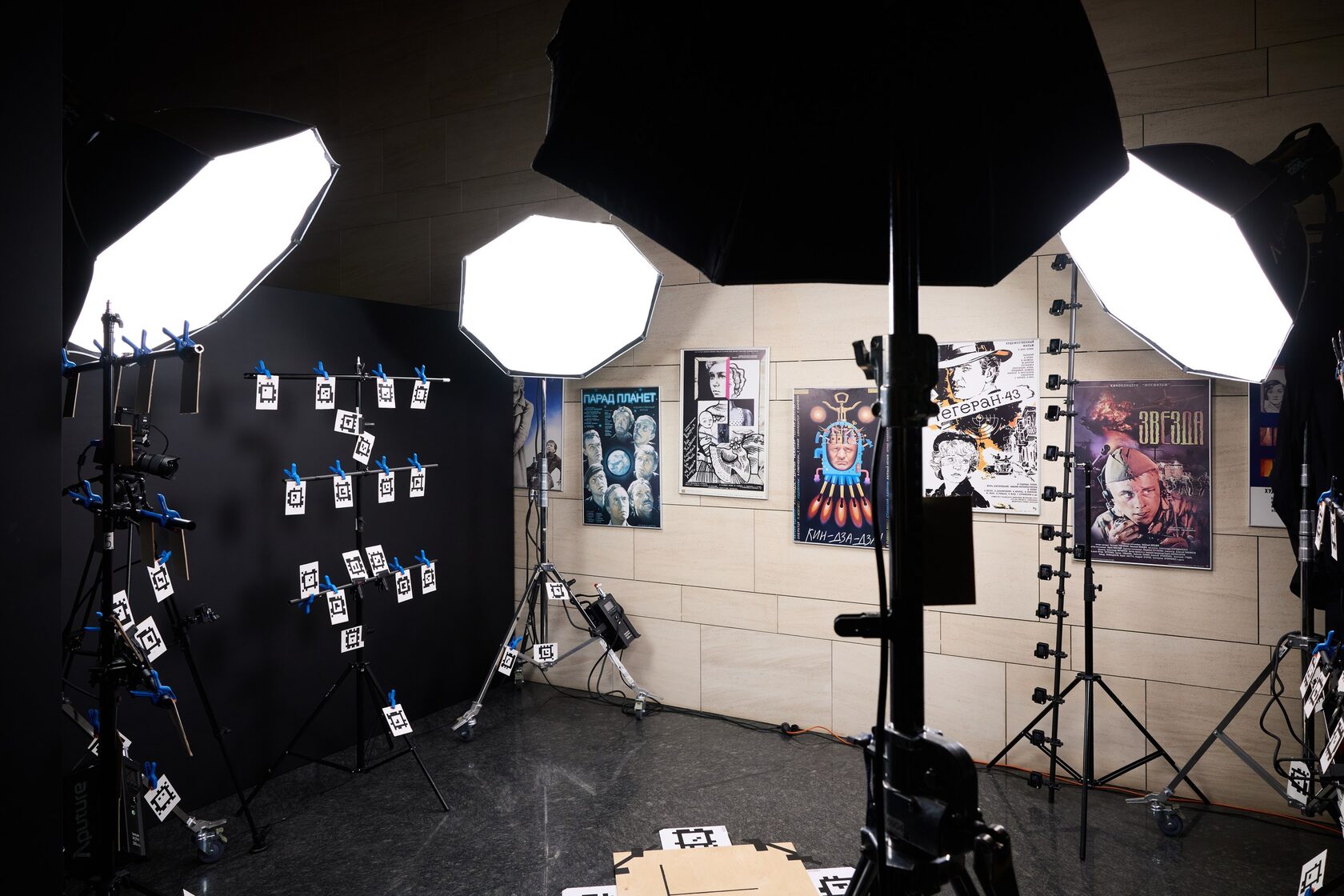
A combined R&D and production case: chroma key pavilion shooting for a 3DGS/VFX demo film, and in-camera virtual production tests using a custom Unreal Engine plugin.
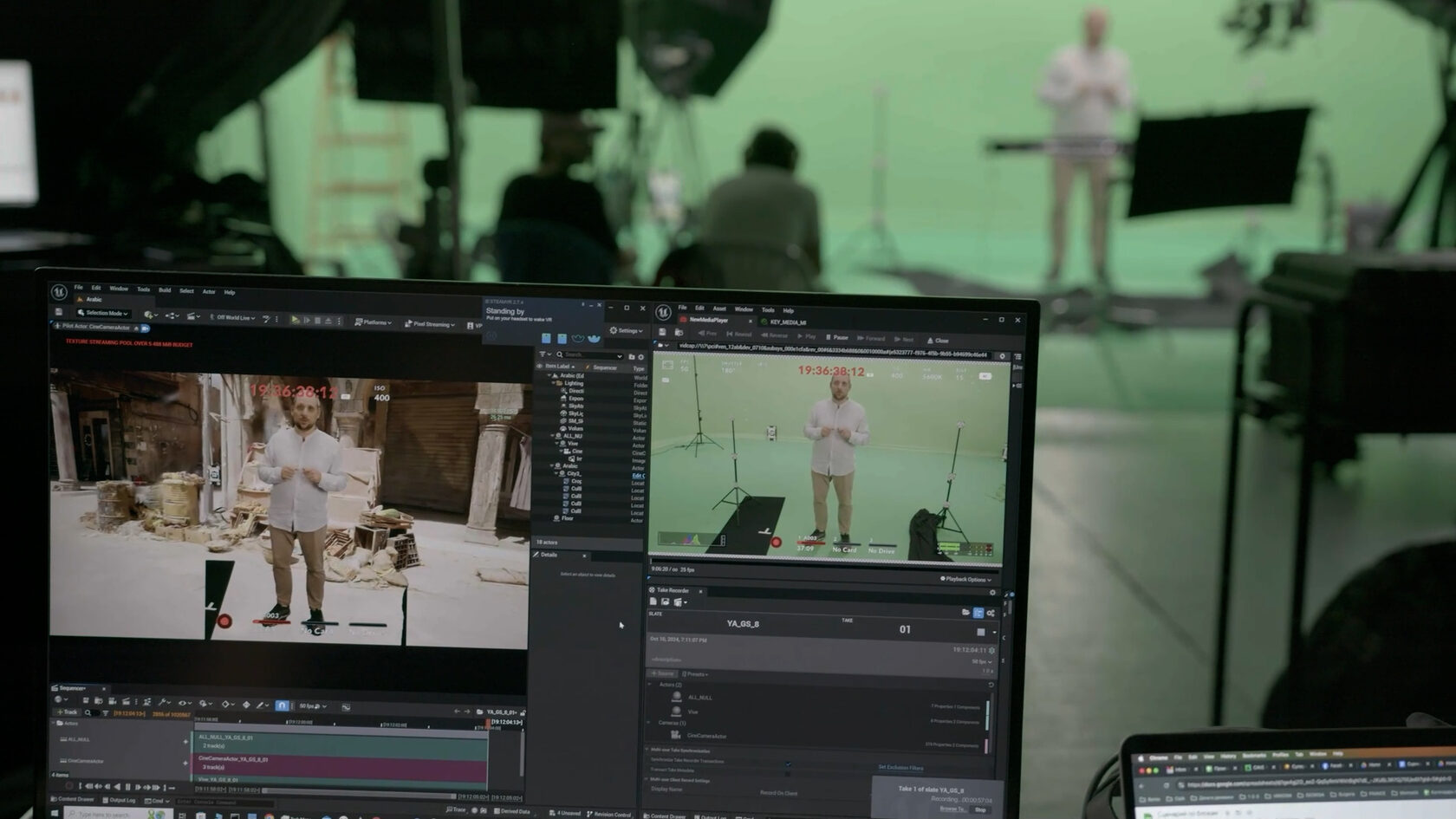
Georgy produced, directed and edited a demo film presenting Gaussian Splatting as a practical VFX and virtual production workflow.
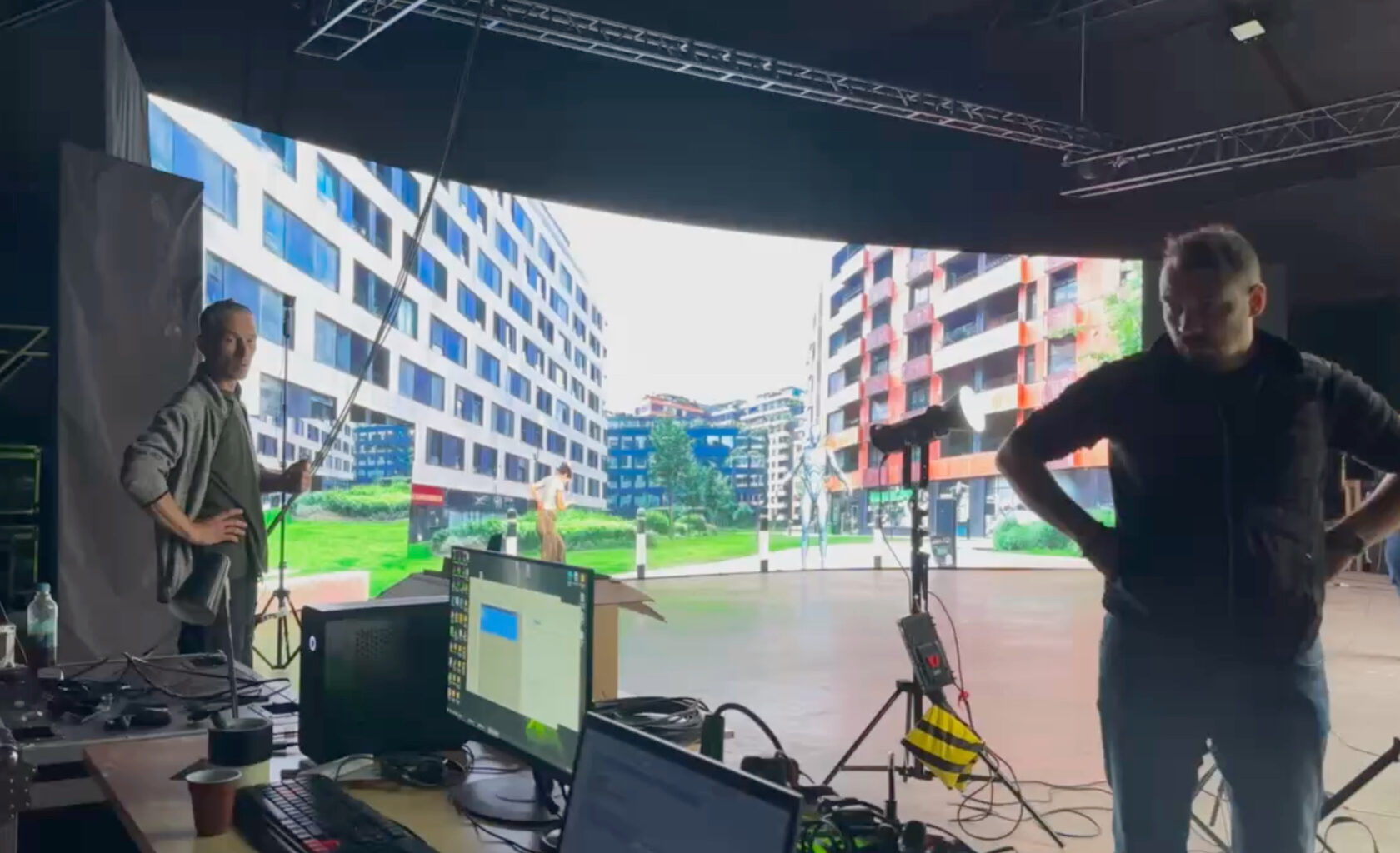
The experiment combined real-location capture, on-set Unreal live preview, chroma key shooting and final compositing with 3DGS environments.
The same R&D branch also informed work on a custom Unreal Engine plugin for rendering, editing and placing 3DGS assets inside existing production scenes.
Chroma key pavilion demo · 3DGS environments, Unreal live preview and VFX compositing
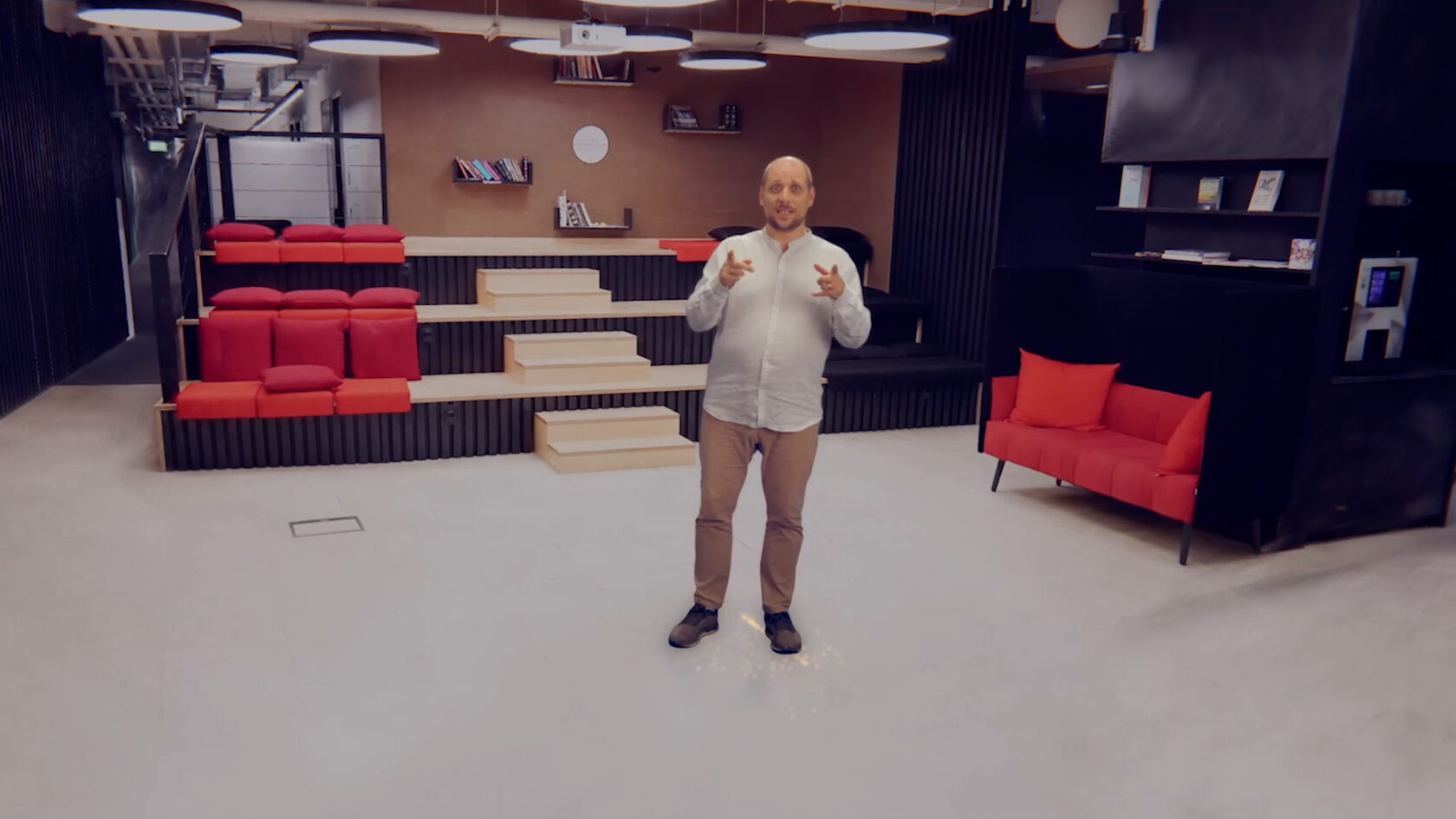
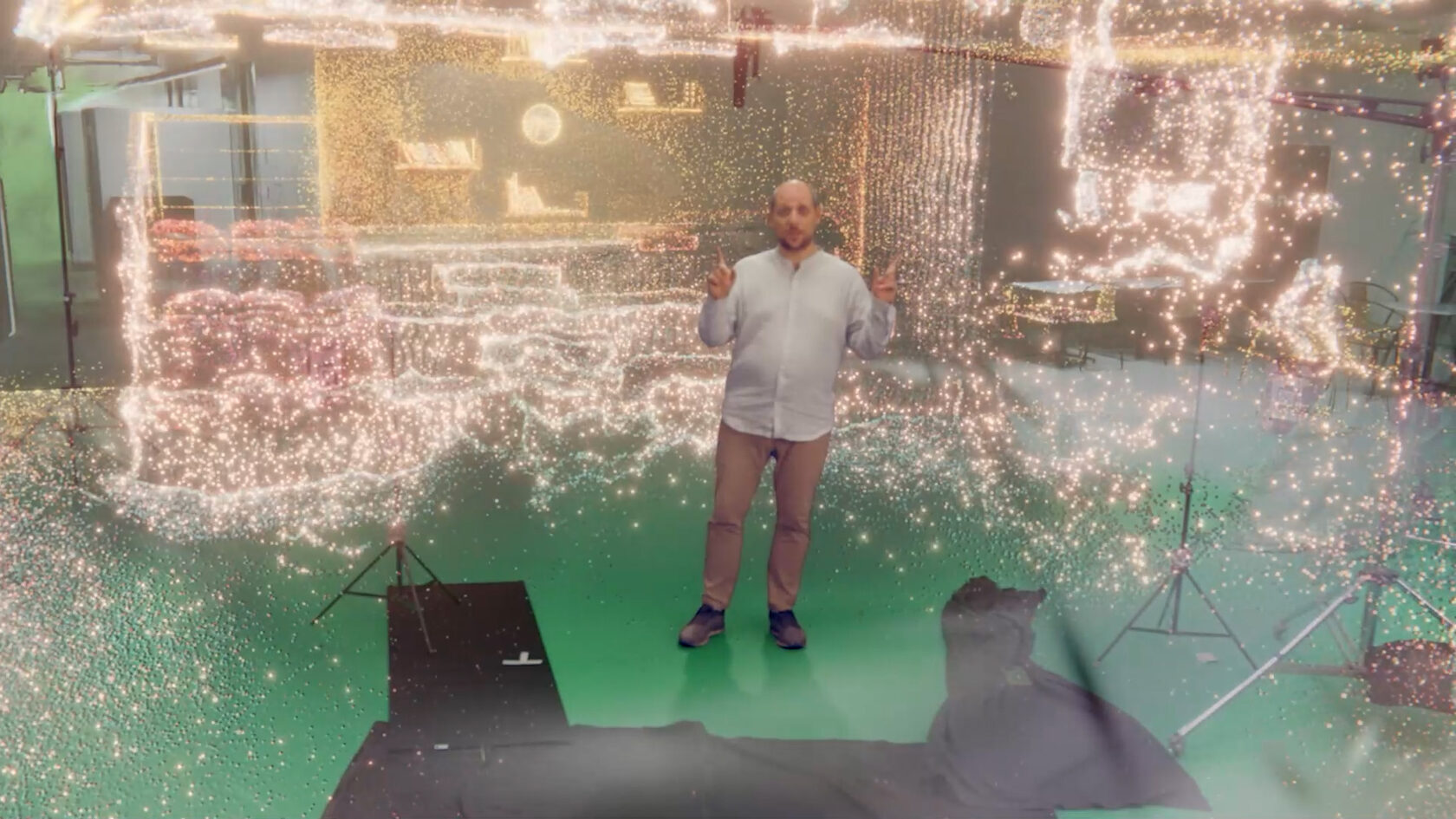
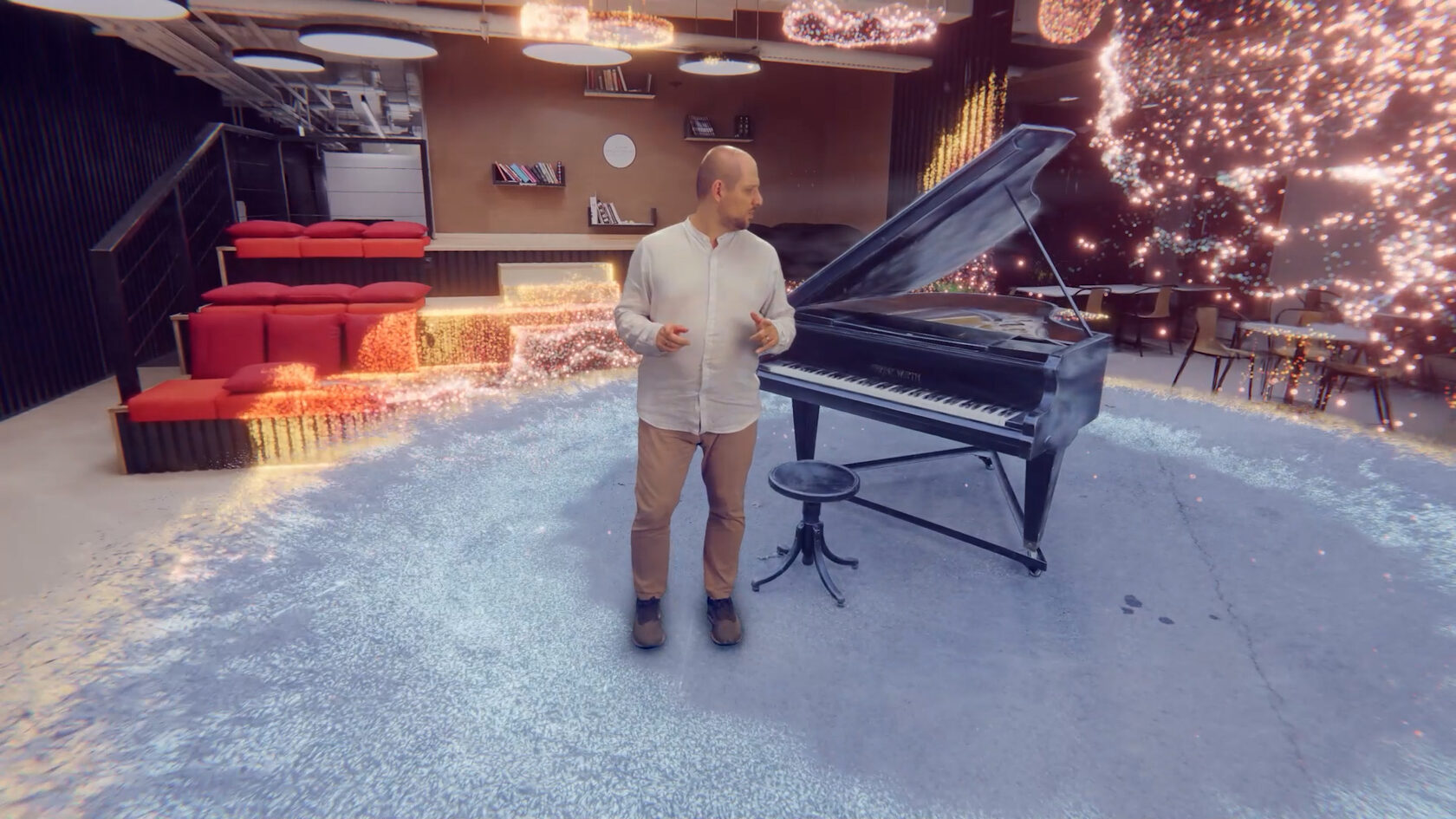
In-camera VP tests
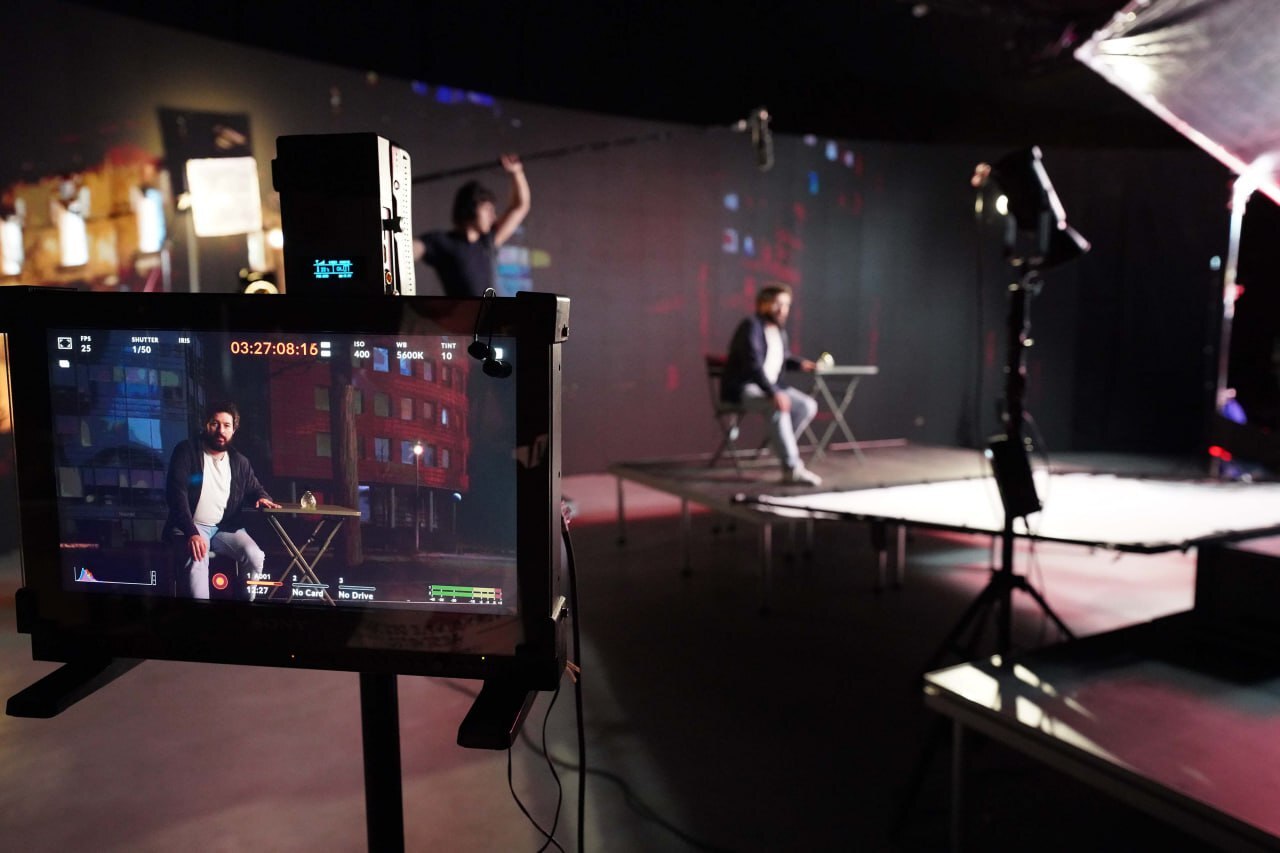
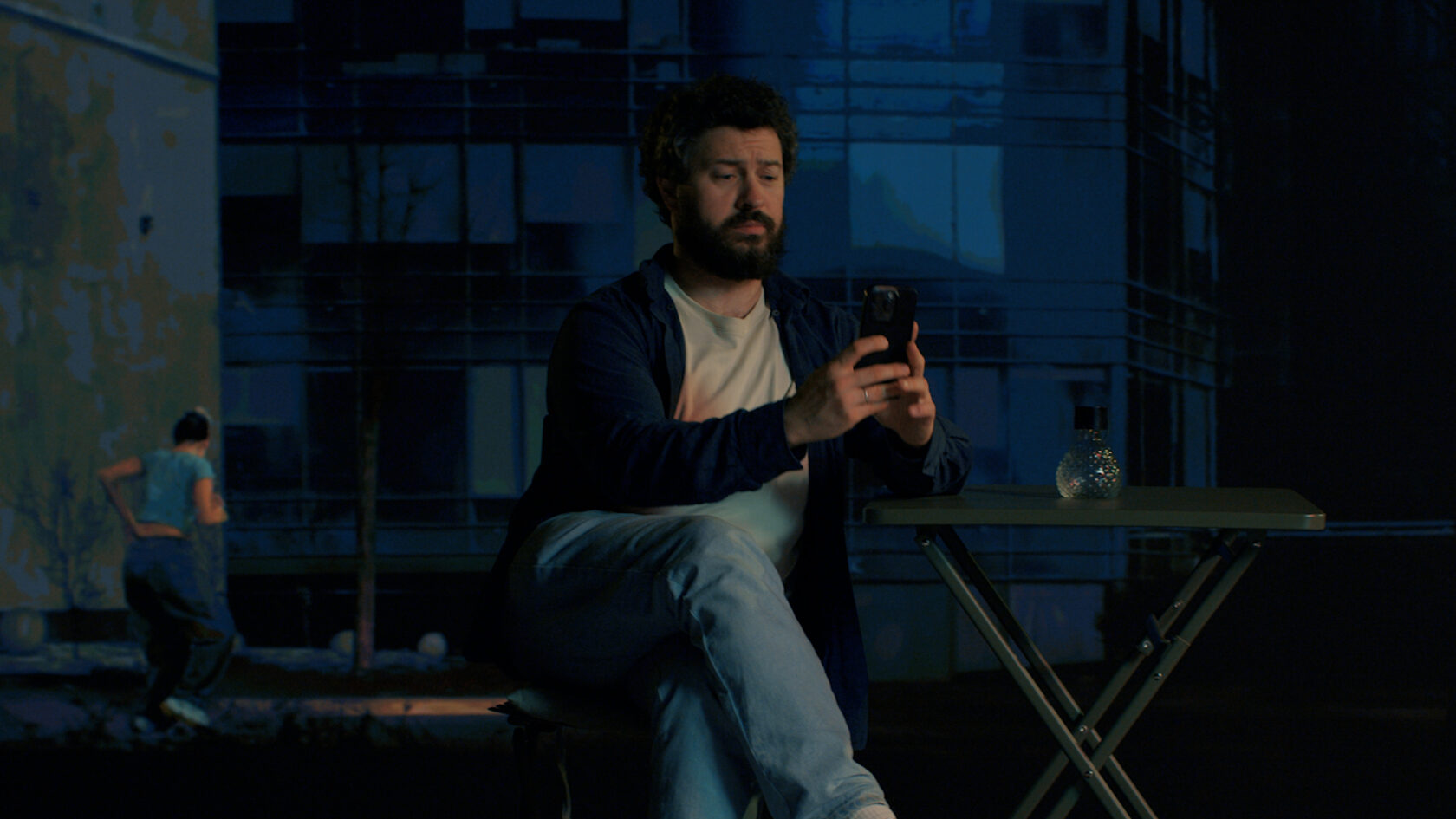
The second branch tested how captured 3DGS locations can work as in-camera backgrounds: real actors, lighting, camera monitoring and 3DGS playback inside a practical studio volume.
Open-source Unreal plugin
Georgy also worked on product and production framing for YaGS, a Gaussian Splatting plugin for UE 5.5-5.7 workflows. The work is now represented publicly as YaGS - Film XR Edition: a Film XR fork of the open-source Yandex YaGS plugin with prebuilt Win64 releases for UE 5.5, 5.6 and 5.7, created so artists, virtual production teams and researchers can test the workflow without compiling from source.
The plugin makes it possible to place 3DGS models inside a scene, combine them with classical geometry, handle depth correctly, run Unreal post-processing, edit regions, create instances without duplicating data and export the result back to .ply.
Custom Unreal Engine plugin demo · 3DGS scene placement, rendering and editing workflow
Event marketing
3DGS for rapid event scans and social media video rendering: guests were scanned on site, reconstructed as volumetric characters and inserted into pre-built Unity video scenes.
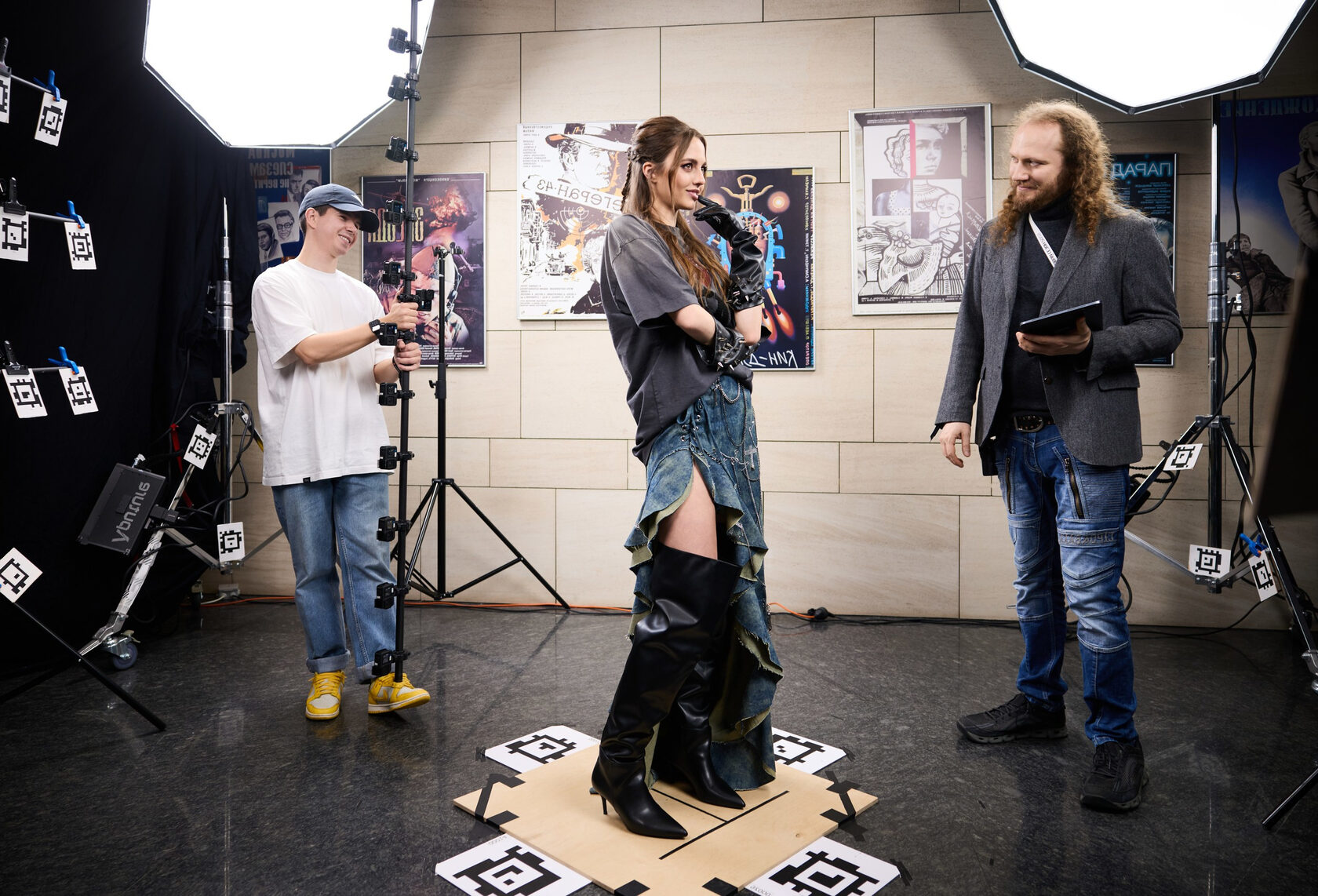
The developed human capture and training pipeline was adapted into a mobile event format: guests entered a controlled scanning zone, were captured with a multi-camera setup, processed into 3DGS assets and inserted into a scripted Unity scene.
The result was a personalized video connected to the world of the premiere: a practical example of Gaussian Splatting used for event marketing, fan engagement and viral social distribution.
Personalized 3DGS event content: fast guest capture, automated processing and Unity-based video output.
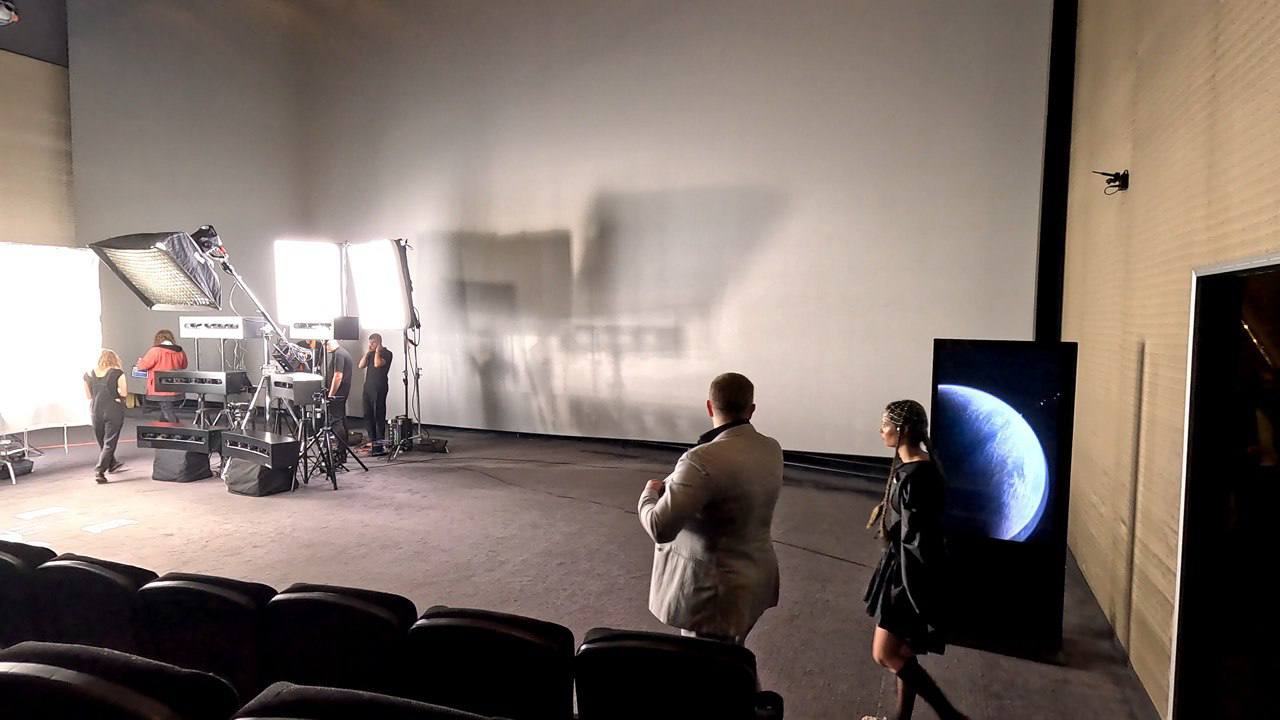
Eterna premiere
For the first activation, the team created a modified bullet-time capture zone and scanned more than 30 guests. Each reconstructed person was inserted into one of two pre-built Unity video projects based on locations created for the campaign. A separate combined video was produced with six actors from the main cast.
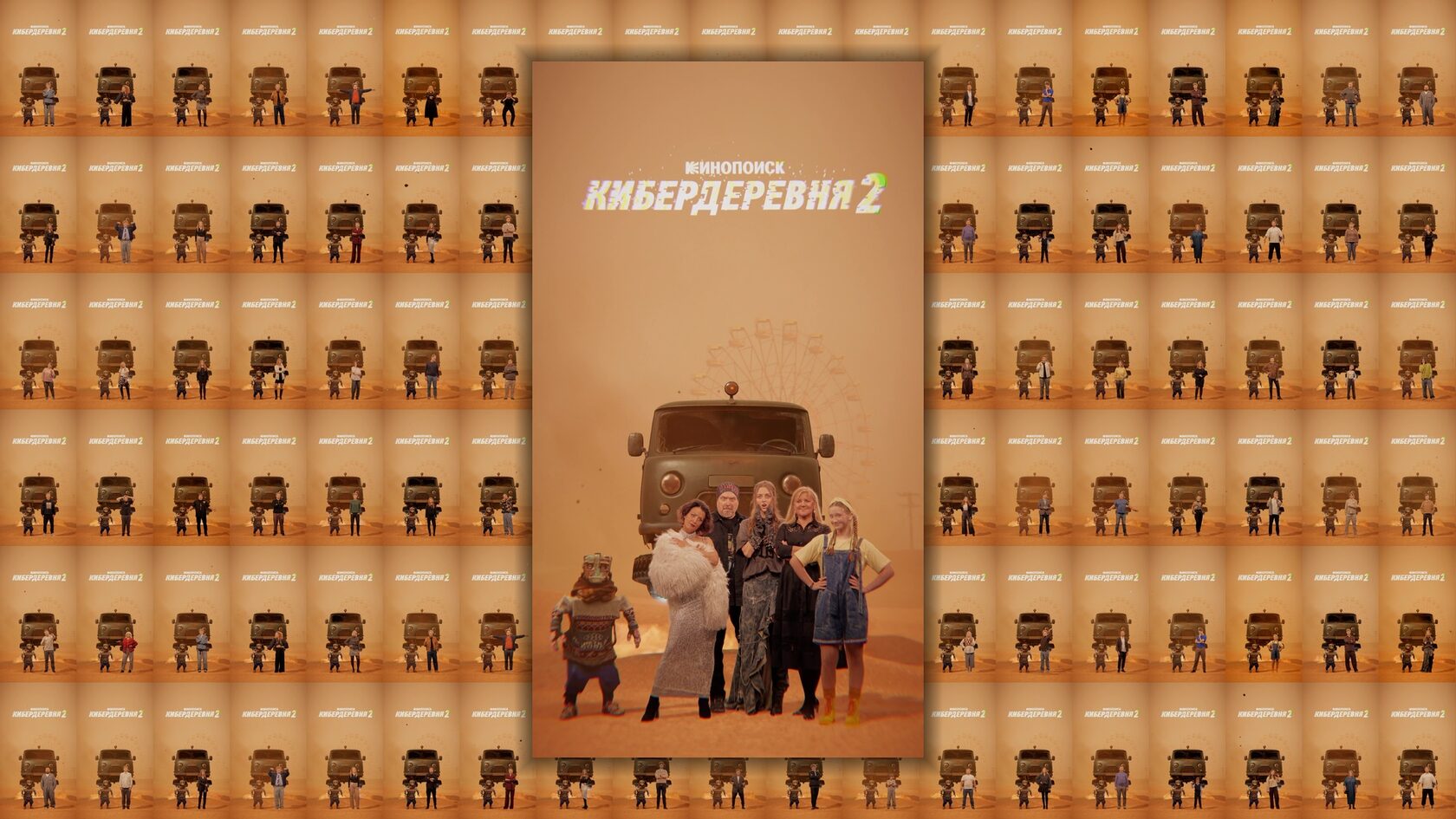
Cybervillage 2 premiere
In October 2025, the zone was modified for a larger flow: more than 70 people were scanned and integrated into personalized video clips inspired by Cybervillage 2. The setup also captured the lead actor for promotional materials.
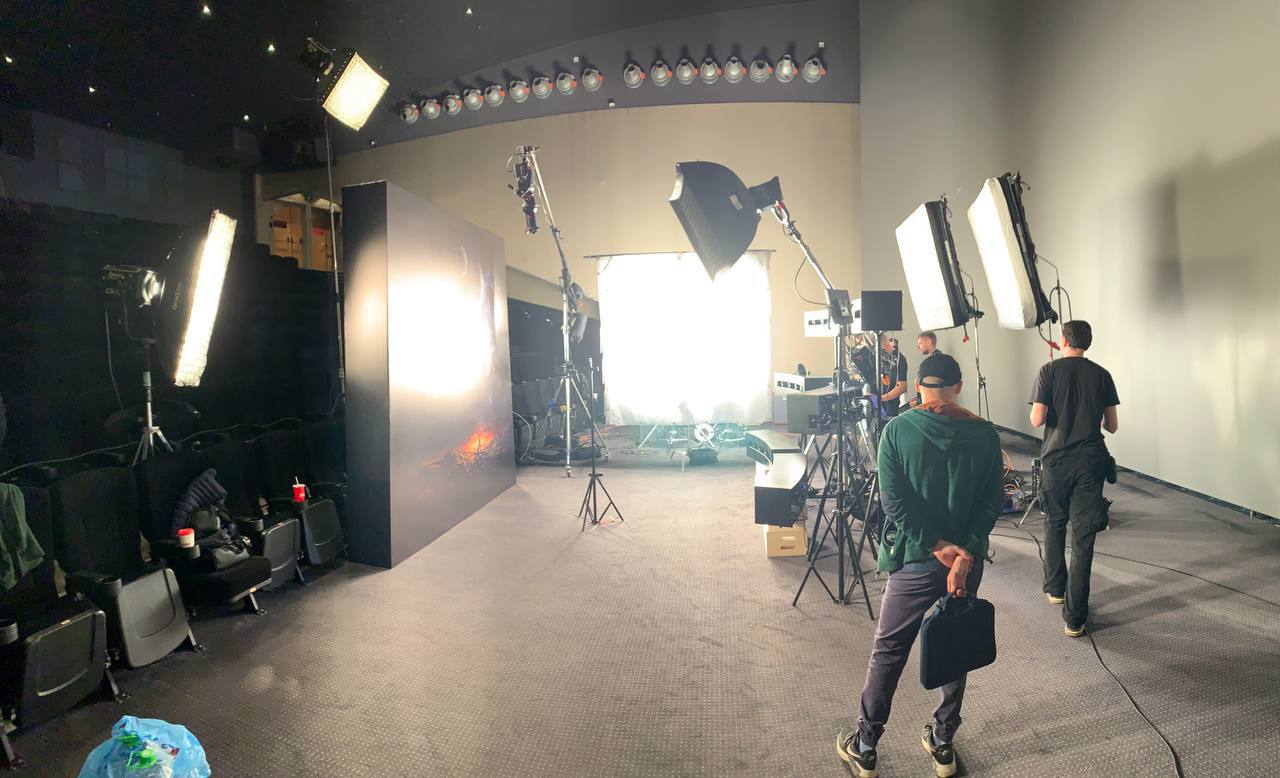
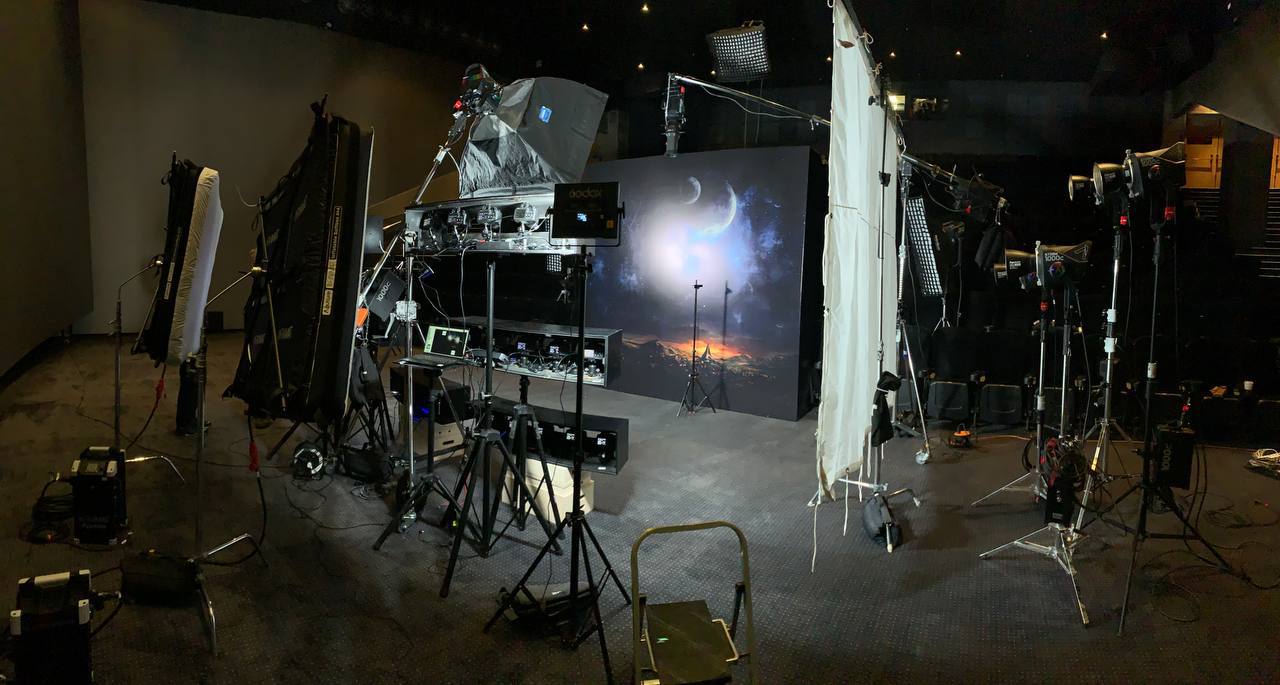
Generative 3DGS / Flat to 3D
Parallel R&D experiments with Dmitry Vorobev's ML Sharp and Unity VFX Graph pipeline, exploring how single-image Gaussian reconstruction can turn flat archival material into animated, programmable VFX.
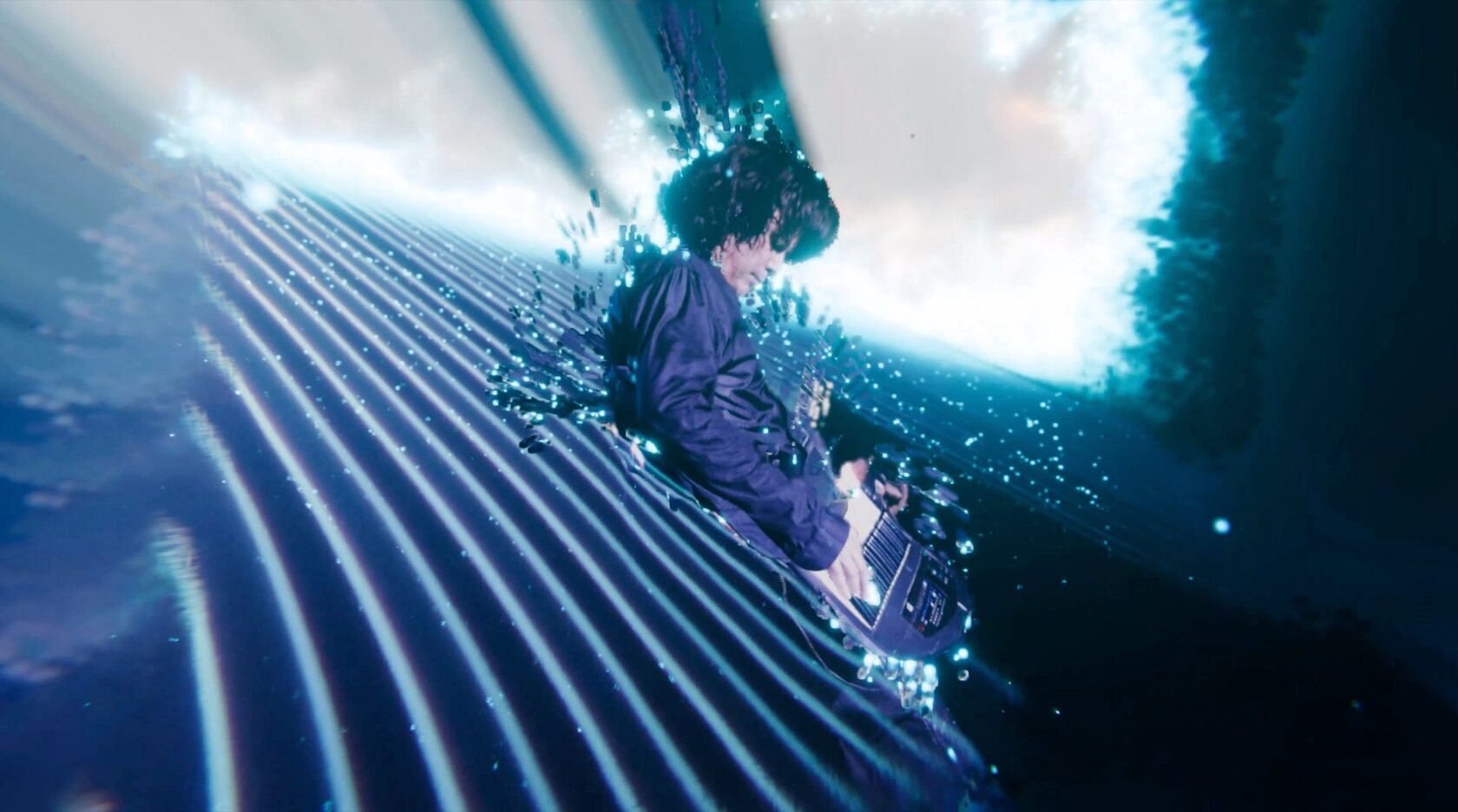
Gaussian Splatting is not only a way to place 3D spaces in Web or VR. In VFX, it can also become a generative layer for depth, camera movement, particles and stylized motion.
After working with Dmitry Vorobev on Jean-Michel Jarre's OXYMORE and Versailles 400, and later side by side in Spatial Media R&D around Gaussian Splatting, Georgy proposed the OXYGEN tribute as an experiment with Dmitry's custom ML Sharp and Unity VFX Graph pipeline.
In parallel, Dmitry developed a related tribute to Sergei Mikhailovich Prokudin-Gorskii, reinterpreting early color photographs, many of them 115-120 years old, as animated 3D Gaussian scenes.
The result points toward a practical format for archival films, music visuals, installations and interactive media: old flat photos can gain depth, camera movement and a new dynamic without rebuilding the scene as traditional 3D.
OXYGEN 50th anniversary tribute: single-image 3D Gaussian reconstruction, Unity VFX Graph animation, edit, sound FX, color and post.
Prokudin-Gorskii tribute: early color photography reinterpreted as animated 3D Gaussian scenes with SHARP / ML Sharp, Unity, VFX Graph and DaVinci Resolve.
01
Single-image 3D Gaussian reconstruction from flat source imagery.
02
Tuning and batch processing for controlled visual output.
03
Real-time visualization, animation and programmable effects.
04
Sound FX, edit, color and final post-production polish.
Physical AI / Simulation
Applied Gaussian Splatting for Physical AI: captured, generated or reconstructed environments become simulation-ready spaces where remote operators can teleoperate humanoids and generate training data.
As co-founder of SIM XR, Georgy brings XR production and Gaussian Splatting expertise into the Physical AI stack: how to capture real locations, evaluate reconstruction quality, prepare spatial assets and translate them into environments that can be used for teleoperation and training workflows.
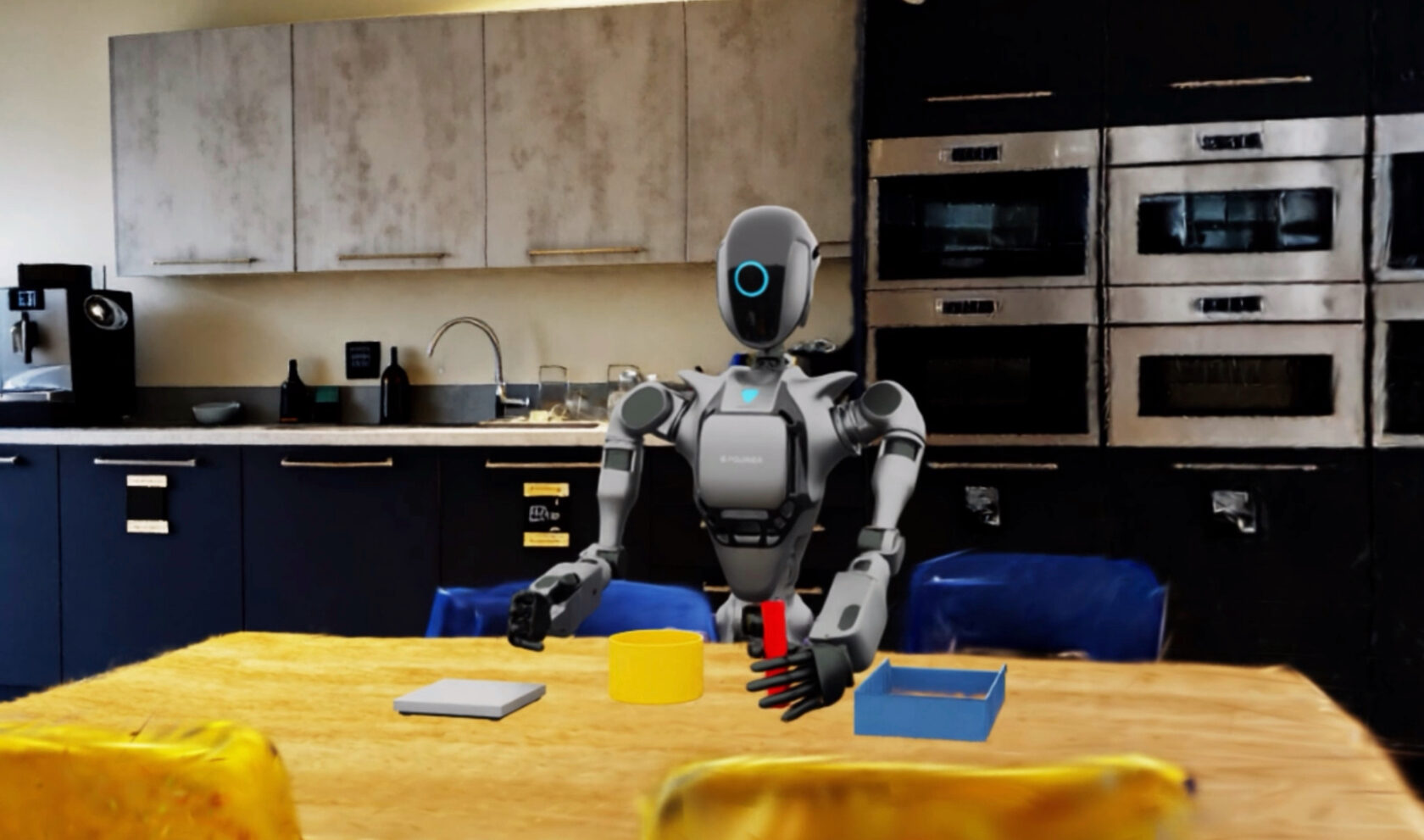
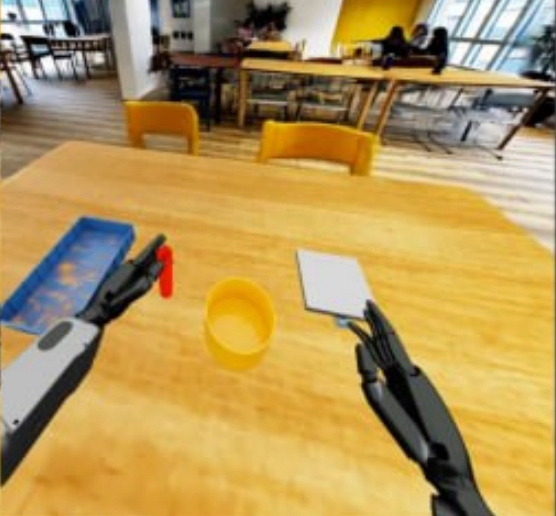
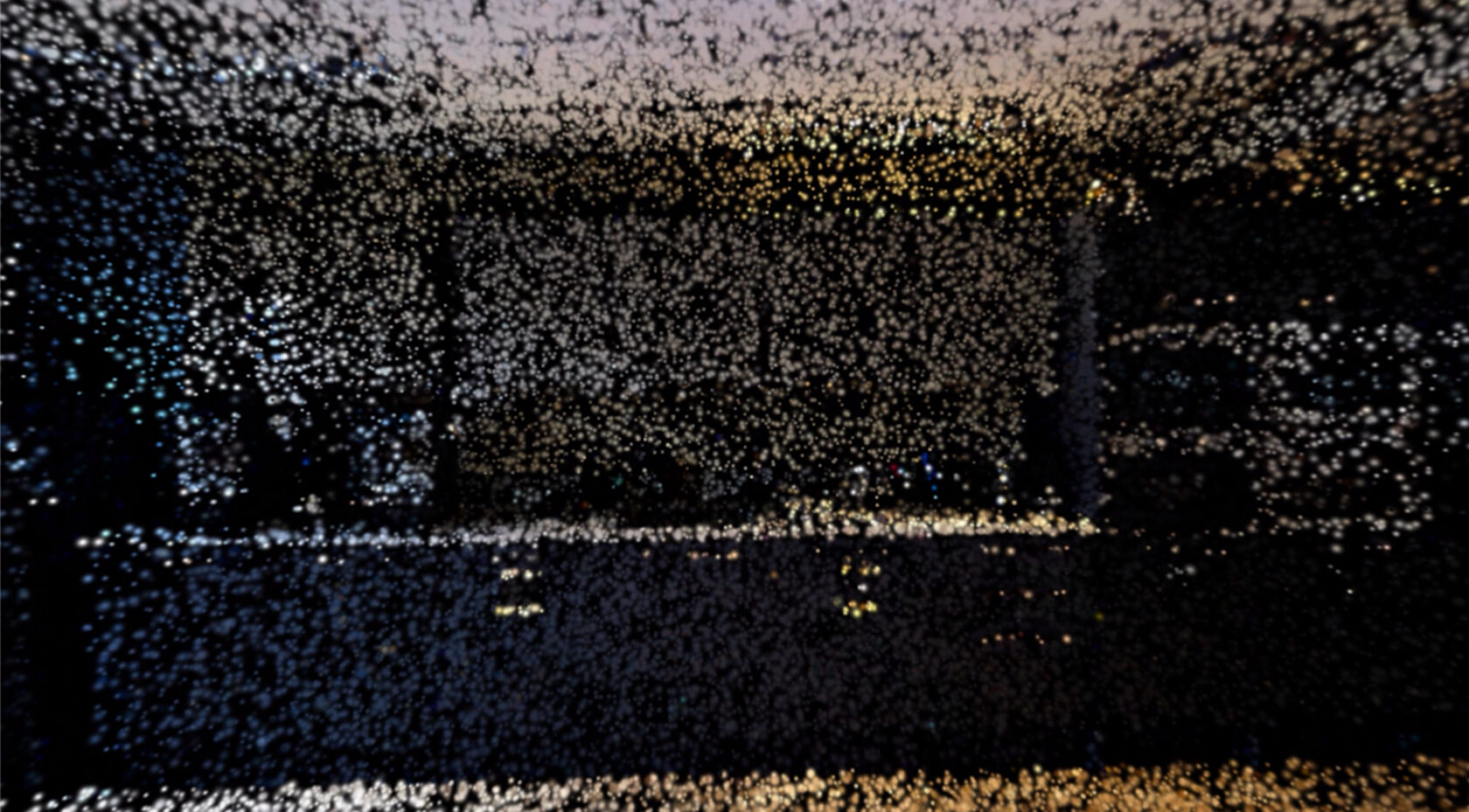
The current demo shows an end-to-end flow in under a minute: capture a real room, reconstruct it as a 3DGS scene, let operators connect from anywhere, teleoperate a simulated humanoid inside that environment, and save the recording as training-ready data.
The broader R&D direction combines several environment sources: direct 3DGS capture of customer locations, generative Gaussian environments created with World Labs-style tools, and fuller digital-twin reconstruction for NVIDIA-oriented simulation workflows, including Omniverse NuRec, OpenUSD scene structure and Isaac Sim interoperability.
Full pipeline in 50 seconds: capture, 3DGS reconstruction, remote operator connection, simulated humanoid teleoperation and saved recording.
01
Real interiors can be captured as 3DGS scenes; missing or hypothetical spaces can be prototyped with generative GS tools such as World Labs Marble.
02
Scenes are prepared as simulation assets, with attention to scale, navigation, semantic structure, collision and OpenUSD-oriented interoperability.
03
Remote operators connect to a simulated humanoid inside the reconstructed or generated environment.
04
Recordings become data for policy training and evaluation inside NVIDIA-oriented Physical AI simulation infrastructure.
Generative 3DGS Pipeline Research
Spatial Memory of Dacha is the personal test case: an October 2025 early-access World Labs Marble experiment combining AI Gaussians, SuperSplat assembly and Arrival.Space deployment.
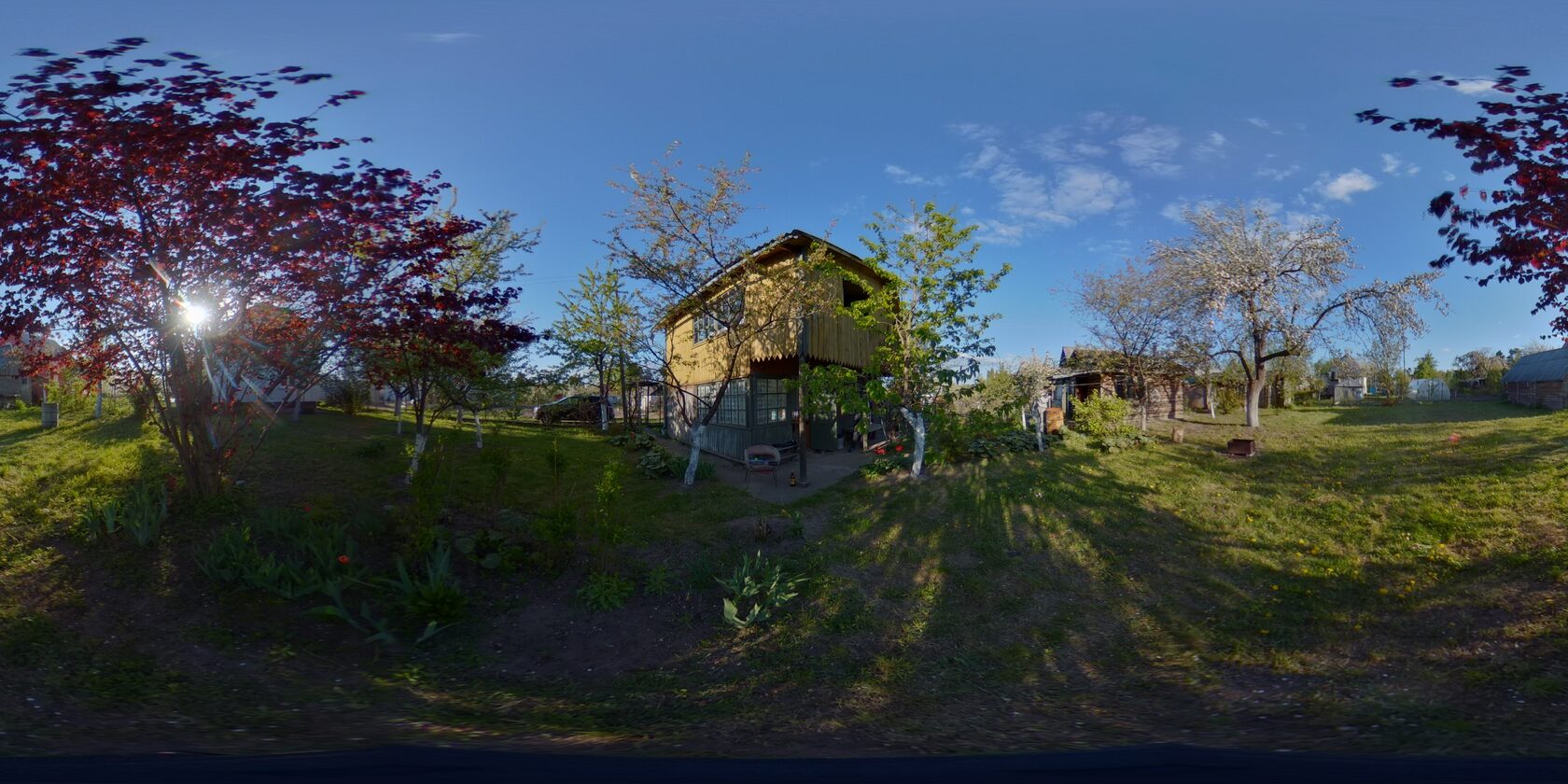
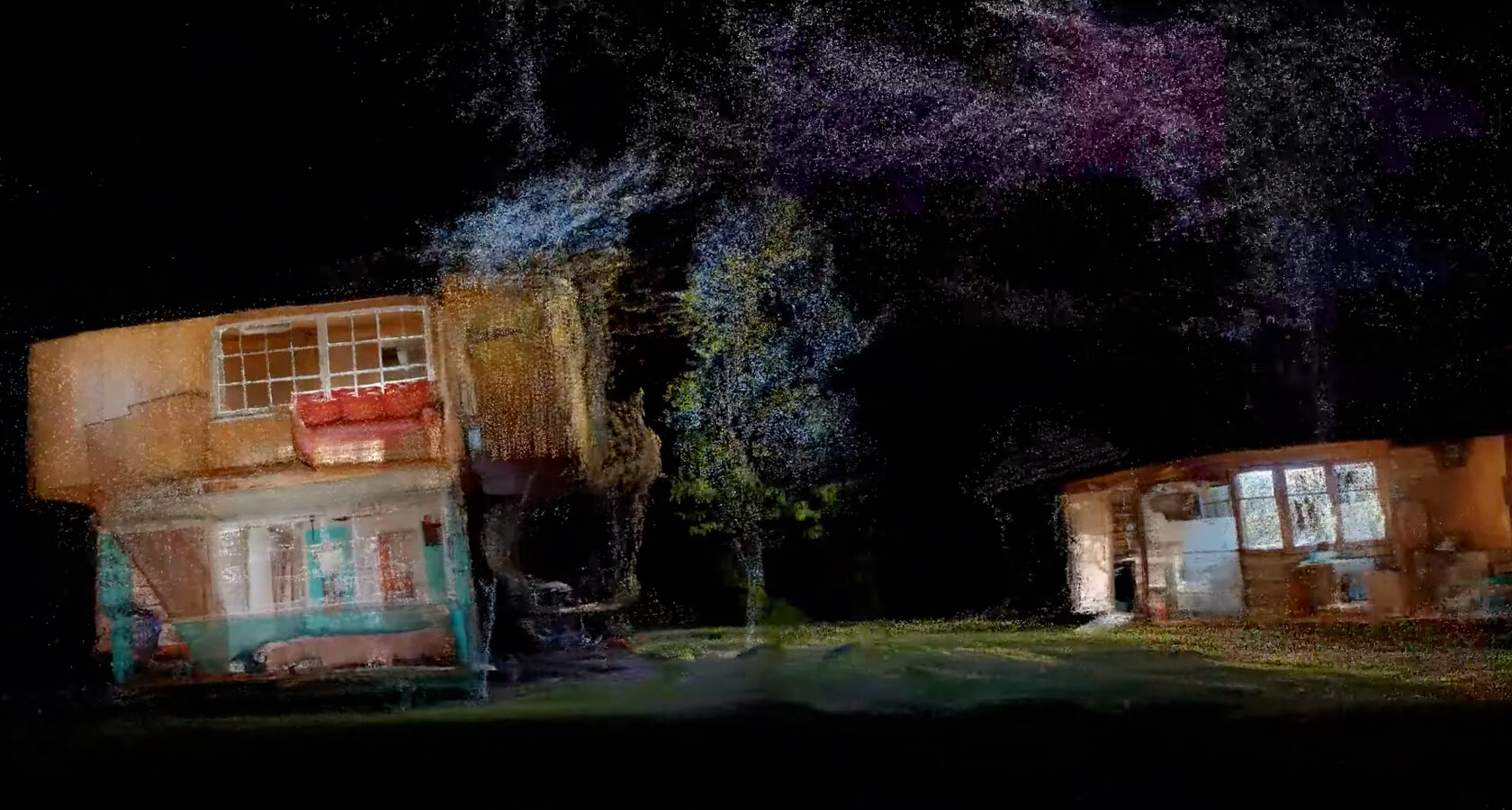
The reconstruction may look imperfect at first glance, but the full explorable world was created from only 13 spherical 360 photos: 8 indoor rooms, 2 shots from the banya and 3 outdoor panoramas.
Using World Labs Marble, PlayCanvas SuperSplat and Arrival.Space, Georgy rebuilt a place where his wife and her siblings spent their childhood summers, creating a way for family members living in different parts of the world to revisit the memory together in a shared virtual space.
The project was created while World Labs Marble was still in early beta access, was noticed by the World Labs team, presented at ImmersiveX, and later became a Poly Awards semifinalist.
This is not an FPV drone flight: it is a virtual camera moving through a reconstructed 3DGS/AI space.
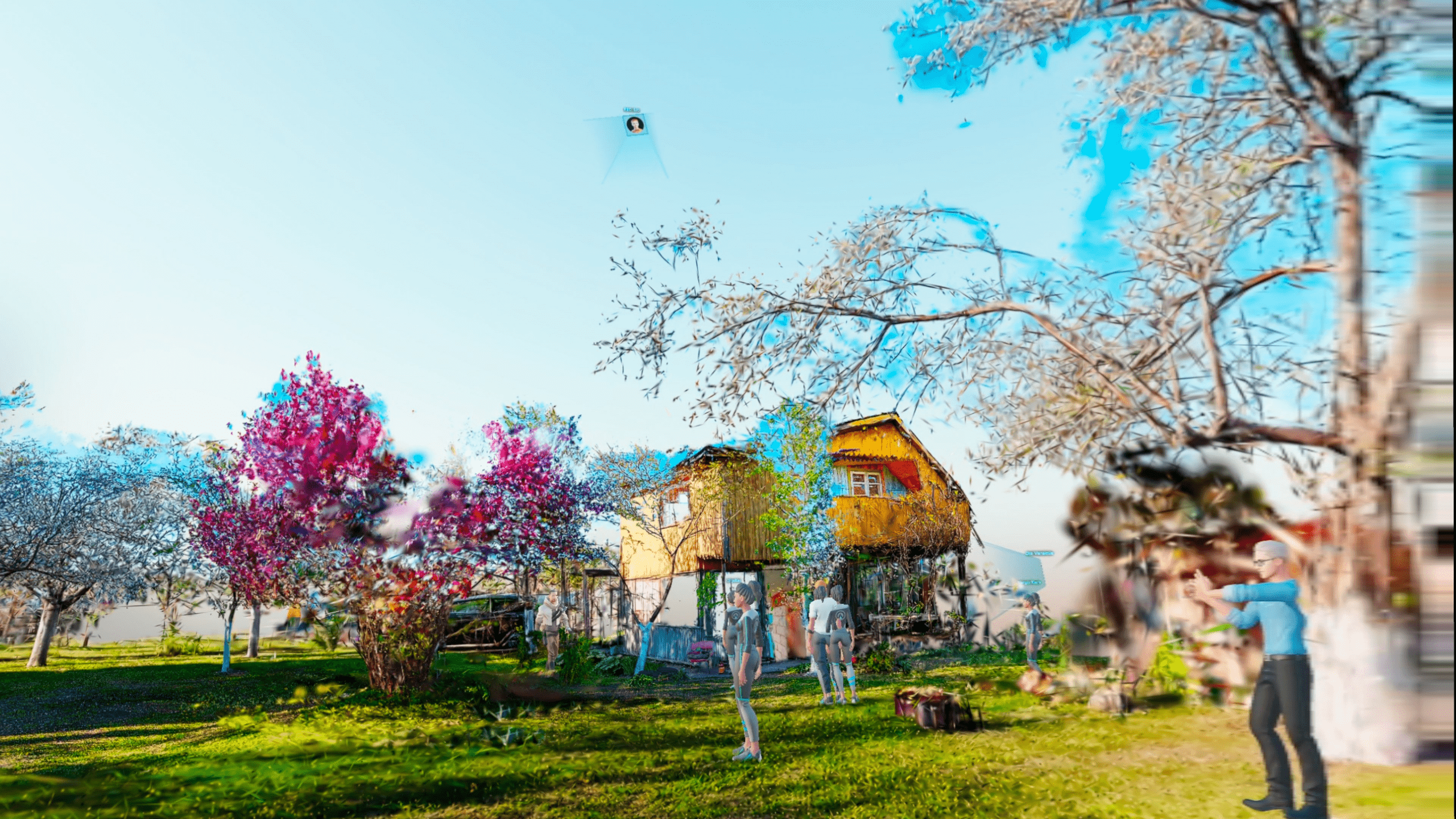
The point was not to produce a perfect scan. It was to test whether generative 3DGS tools can recover enough spatial continuity from a very small archive to let people meet inside a memory that no longer exists physically.
Step 1
In early beta access, World Labs Marble generated individual Gaussian reconstructions from equirectangular 360 photos, giving each room and exterior viewpoint a spatial starting point from a minimal archive.
Step 2
The scans were cleaned, aligned, scaled, combined and patched in SuperSplat. The final combined scene reached roughly 22 million splats and about 1.3 GB before compression.
Step 3
The world was uploaded as compressed PLY for collider generation, cleaned in Blender with support from Mikhail Mokrushin, then re-uploaded as a SOG scene of around 220 MB.
Education / public talks
Alongside production work, Georgy has been invited to teach, present and moderate practical conversations around 3DGS tools, creative workflows, metaverse worlds and photorealistic capture.
INTERACTION XR: Co-Creating Future Worldbuilding Workshop, Serbia, February-May 2025.
Workshop format connecting XR worldbuilding, online spaces and practical spatial production methods. The project used a shared online world as a teaching and production context, helping participants understand how immersive environments can be authored, tested and presented.
It sits next to the Gaussian Splatting lectures as part of Georgy's public education practice: not only explaining tools, but showing how spatial media workflows become collaborative worlds.
Lectures and festival sessions
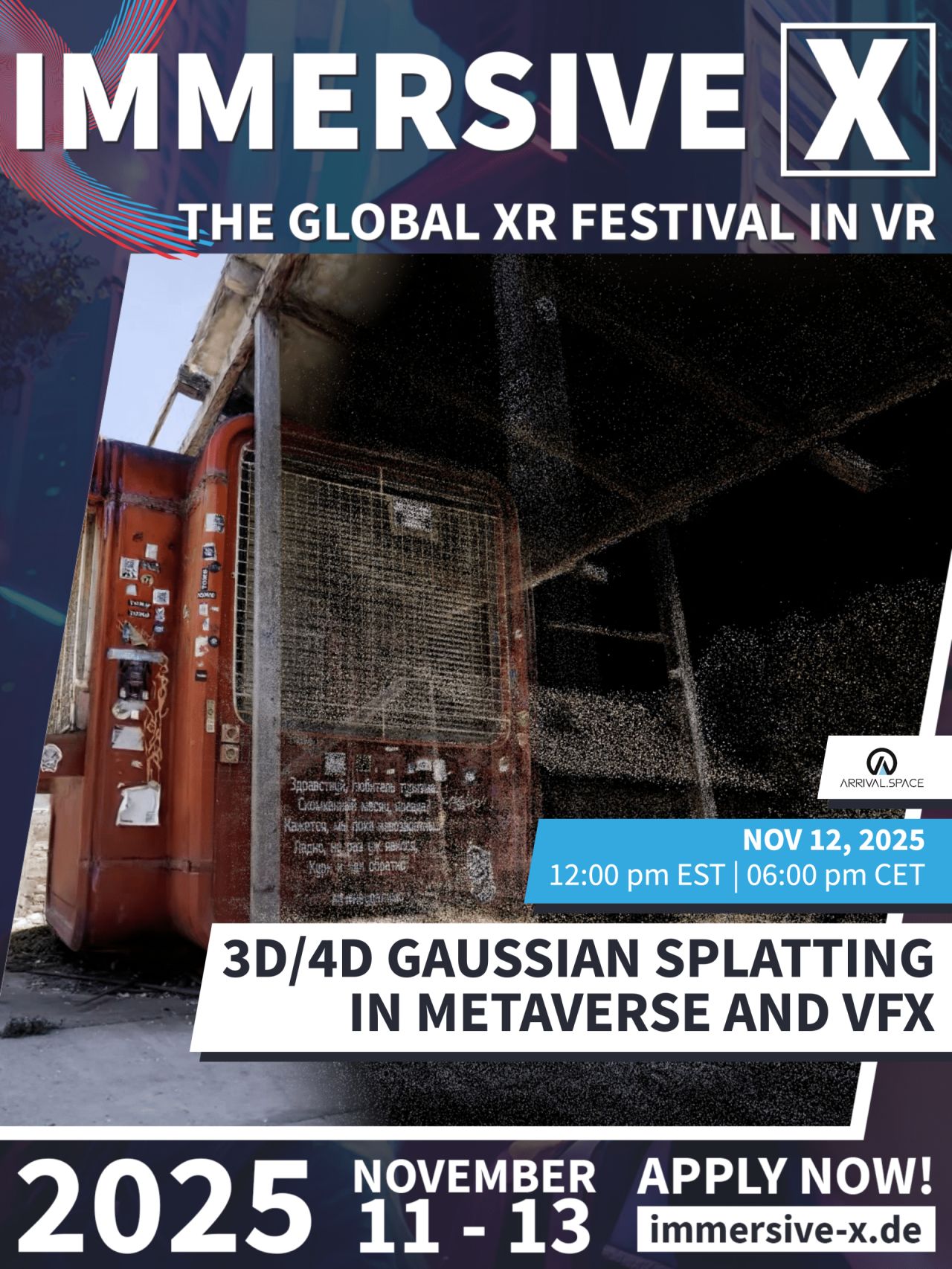
A festival session on applying Gaussian Splatting to social VR, metaverse spaces and VFX pipelines.
Session page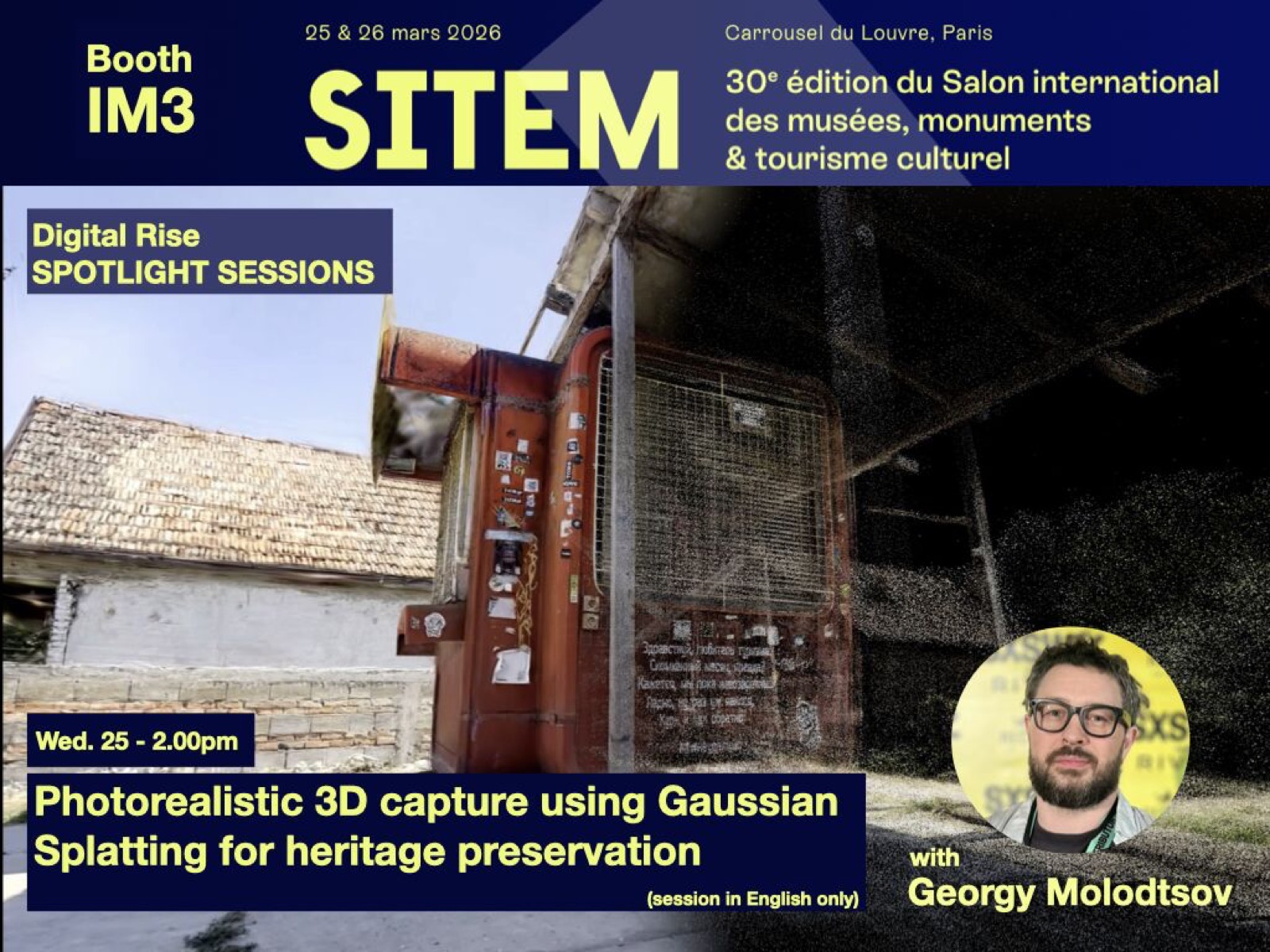
Digital Rise Spotlight Session on using Gaussian Splatting for heritage documentation and preservation workflows.
Tools, techniques and platforms for a new level of photorealism in XR production.
Festival pageA practical explanation of the technology, its creative uses and its production implications for immersive creators.
Session pageCapability map
The current focus is creative production and consulting around applied Gaussian Splatting projects: from capture strategy to engine integration and public-facing experiences.
Designing capture approaches for people, objects and spaces, including multi-camera studio setups, lighting, calibration and production constraints.
Using 3DGS as a practical production layer for shots, previz, location scouting, chroma key tests, in-camera VP and real-time visual workflows.
Bringing splats into Unity, Unreal, Web viewers and social VR environments for interactive presentation, camera work and spatial storytelling.
Assessing tools such as Luma, Polycam, Kiri, SuperSplat, PlayCanvas and World Labs Marble against creative, technical and budget needs.
Developing 3DGS as a medium for memory, place, documentary practice, VRChat worlds and new forms of spatial authorship.
Exploring captured and generated 3DGS environments as training spaces for visual motor policies and robotics simulation.
About Georgy
Georgy Molodtsov is co-founder of SIM XR and founder of Film XR. His work sits at the intersection of XR, immersive production, Gaussian Splatting, social VR, simulation workflows and spatial media strategy.
He brings 20+ years of experience across film, documentary, advertising, XR production and international ecosystem building, with projects recognized at Venice Immersive, Cannes XR, SXSW XR, NewImages, Raindance Immersive and the Webby Awards.
Recent R&D focuses on applied 3DGS, volumetric capture, digital twins, real-time engines and human-demonstration data workflows for Physical AI. Georgy is a Fulbright Fellow and a Berlinale Talents alumnus.
Consulting, production and talks
Available for R&D consulting, capture supervision, virtual production planning, interactive 3DGS experiences, lectures and workshops.